

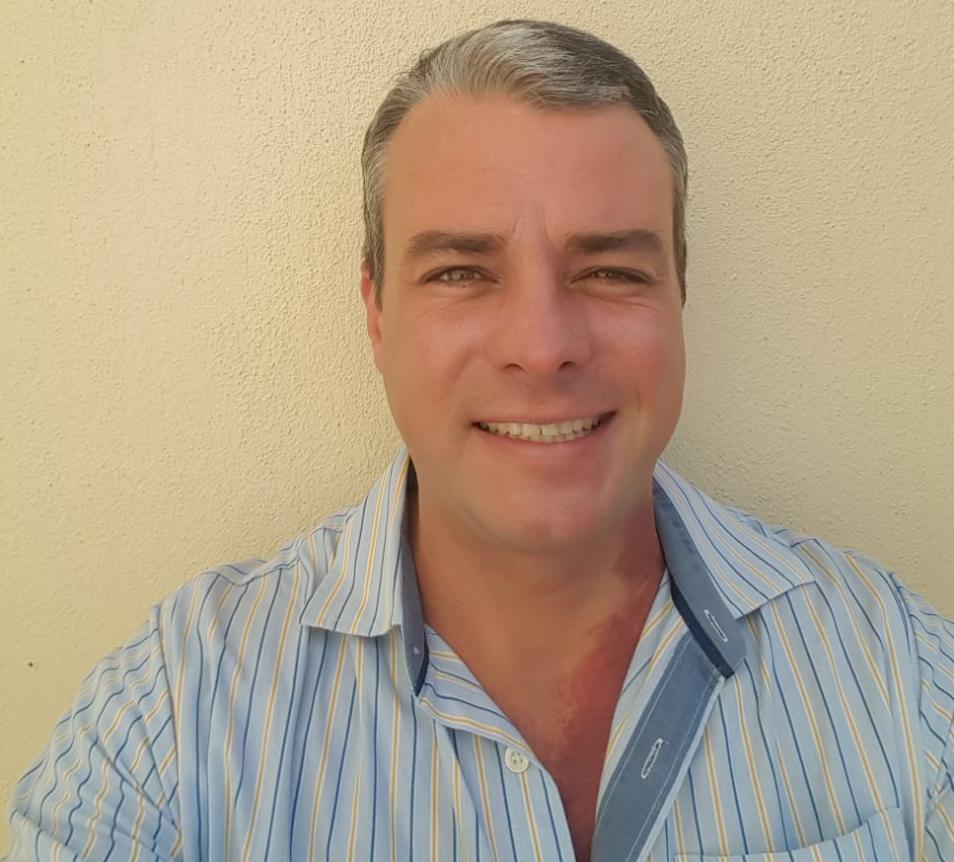
Roland Leopold Duyvené de Wit
Bloemfontein
Summary
Industry professional with focus on driving innovation through strategic project management and cross-functional team leadership. Adept at developing and implementing research methodologies, ensuring compliance with regulatory standards, and fostering collaborative environments to achieve business goals. Proficient in utilising data analysis and market research to inform product development and improve operational efficiencies.
Overview
21
21
years of professional experience
1
1
Certification
Work History
Head of Research & Development
TruNek (South African startup delivering Network‑a
Bloemfontein
08.2023 - Current
- Technologies
Open RAN, O‑RAN architecture, srsRAN, OpenAirInterface, SDR hardware (Pluto+, B210), SoapySDR driver stack, firmware calibration, shielding/thermal/weatherproofing for SDR macro deployments, LTE/5G, DEM/clutter/building data, Signal‑Server, MongoDB, Python, Linux, KPI frameworks.
Responsibilities
Directed R&D into open‑source RAN stacks (srsRAN, OAI) and SDR platforms (Pluto+, B210), validating throughput limits, dual‑carrier aggregation, and handover performance.
Engineered firmware and SoapySDR driver adjustments for Pluto+ devices, including oscillator calibration, to achieve stable LTE/5G attach and throughput.
Designed shielding, heat dissipation, and weatherproofing solutions to harden B210 SDRs for macro‑cell deployment, enabling reliable outdoor operation.
Developed modular NaaS architectures for rural deployments, enabling zero‑capex models for MNOs and positioning TruNek as a monetization partner.
Engaged with stakeholders across MNOs, regulators, and vendors to bridge technical validation with business strategy, securing support for regulatory compliance and trial readiness.
Built reproducible lab‑to‑field workflows, aligning counters and KPIs to MNO standards (availability, accessibility, retainability, mobility).
Leveraged Signal‑Server (open‑source RF planning engine) with DEM, clutter, and building extent data to generate accurate best‑server plots, supporting site selection and coverage simulations.
Produced detailed documentation and automated tools for SDR calibration, subscriber database migration (srsRAN ↔ Open5GS), and KPI reporting.
Key Achievements
Validated stable TM1–TM4 operation on B210 at 100 PRB, achieving near‑theoretical LTE throughput.
Successfully demonstrated intra‑cell handovers and dual‑carrier aggregation in open‑source RAN environments.
Built a KPI mapping framework aligning srsRAN counters with MNO standards for accessibility, retainability, and mobility.
Implemented firmware and driver‑level adjustments on Pluto+ SDRs, enabling reliable multi‑antenna operation and calibrated frequency stability.
Designed and tested shielding, thermal management, and weatherproofing enclosures to transform SDRs into macro‑grade units.
Advanced TruNek’s NaaS model into a monetization framework, presenting to MNO stakeholders as a scalable solution for rural coverage expansion.
Established partnerships with international vendors (e.g., Baicells) to validate Open RAN integration and ensure compliance with ICASA regulatory requirements.
Applied DEM, clutter, and building extent data in Signal‑Server to produce high‑accuracy coverage and best‑server plots, improving site planning and stakeholder confidence. - Developed comprehensive risk management plans for each project phase, mitigating potential obstacles to successful outcomes.
- Conducted comprehensive market analysis to identify emerging trends, guiding strategic direction for future research initiatives.
- Analysed data using sophisticated statistical software, providing actionable insights that informed product development strategies.
RF Design Engineer
Vodafone NZ
02.2020 - 07.2023
- During my employment at One NZ, I was contracted to the RCG (Rural Connectivity Group), a government initiative to design and build cross operator sites, provisioning EEU’s (Eligible End Users) in rural areas with predetermined service levels.
- The project was a large success, and in the years I was engaged in it, we managed to build 300 new sites (which was a record for NZ, unrivaled by any other MNO).
- I developed a system that would calculate the amount of EEUs covered by each individual site along with all the required outputs for supporting documentation for approval.
- We were also engaged with all three MNO’s in NZ in order to attain spectrum on a sector level for each site.
- We also recommended certain parameters and camping strategies in order to minimize interference issues.
- I was brought back to One NZ, to assist with the 5G roll-out project, and assisted in creating a system that pulled the existing configurations from the site, and put it in a document together with our target design for high level review by the project team.
- We performed statements of compliance in terms of EMF, and I created a system to automate this for us.
- Vodafone NZ, now known as One NZ, was involved in a government initiative to design and build cross operator sites, provisioning EEU’s (Eligible End Users) in rural areas with predetermined service levels.
- Reason for seeking other employment: Severe burnout due to separation from my children and divorce proceedings.
RF Planning Head
Star Towers
09.2018 - 11.2019
- My general planning obligations include but are not limited to network design through planning of new sites, translating said new sites into a template and furnishing all of the required fields for site acquisition subcontractors, continuously evaluating current network needs and adapting the site plan accordingly, providing guidance on preferred candidates for new sites, addressing planner concerns regarding specific sites, maintaining new sites tracker and ensuring information stays up to date, perform ranking and site prioritization to fortify quality builds in line with operator requirements, create coverage simulations using Atoll to support motivations of NSB’s for municipalities and MNO’s, staying up to date with operator roll-out strategy, leveraging existing relationships to promote sites and identify problematic areas.
- Then in my spare time, I’m currently developing a website using PHP and mySQL from which operators and investors would be able to view our built sites, download site and simulation KML’s of sites we have on offer, view available antenna slots and other site specifics.
- Once the development phase is complete, I’ll maintain the website to ensure all information stays up to date and implement new feature requests where required and feasible as well as overhauling website when required.
- I also draw up targeted marketing lists and circulate new sites to operators to optimize occupancy time under budget constraints.
- This is a remote-working position, and as such I can claim the required degree of self-discipline and motivation to make a success of this.
- Reason for seeking other employment: Funding for new site builds is dwindling, and hence it is risky to be working for a tower company. In addition, I am looking for challenges of a more technical nature.
RF Planning and Optimization Manager/Engineer
ZTE
09.2014 - 03.2018
- Since the project’s duration was longer than the traditional vendor-driven project, I have been bestowed different responsibilities at different phases of the project.
- During the modernization/swap epoch of the project, I was involved with single site verification reports and generating KPI reports for the operator/customer for sites that has been swapped, as well as making suggestions and implementing changes to improve performance for the ones that failed the baseline targets.
- I was also responsible for designing cluster drive test routes and evaluating the drive tests.
- Thereafter, but while the swap was still ongoing, I was responsible for managing the team responsible for customer complaints, and personally responsible to handle VIP customers’ complaints.
- I was responsible to check sites for alarms, do optimization, and make further suggestions to cluster owners on parameter changes, as well as delegating drive test and optimization engineers to perform the required duties.
- When the swap project was concluded, I started getting involved with the roll-out project entailing a full turnkey solution for the operator.
- I managed the RF planning team, whom were responsible for creating, and tweaking the Nominal Cell Plan (NCP) to be both realistic, and at the same time designed to meet the agreed pre-determined coverage criteria.
- As we ran into the implementation phase of this project, I got involved with evaluating site candidates from an RF perspective, getting approval on a per-site basis as well as a yearly budgeted sign-off on behalf of the operator.
- The latter also entailed ranking sites to ensure the most important sites from the pool gets built first.
- I was also during this time tasked with full responsibility of the operator’s planning tool, allocating cell ID’s, scrambling code planning for UMTS, some frequency planning, defining the core network definitions for these upgrades and new sites etc.
- I also used my development skills to create ODBC Excel sheets that utilized the Oracle databases and produced acceptance documents automatically in bulk, saving a lot of time for our teams, as well as eradicating human error on these reports.
- Finally, as I made the transition to LTE optimization, I ensured that my duties were well understood by the people taking over from me and I made sure that they will be able to function efficiently while I was starting my new role as an LTE optimization engineer.
- For roughly the last year and 7 months of my contract, I have been entrusted with LTE optimization responsibilities.
- I was responsible to get single site verifications approved by the operator, performing cluster and special route RF optimization, as well as suggesting, planning, implementing and finally reporting on trials for new features and/or other major works.
- Towards the end of my contract, I’ve successfully planned and executed TAC splits, and also increasing the paging capacity of the 2100 layer (5 MHz) by adjusting the paging occasions of the eNodeB where TAC splits were not feasible, in order to allow more paging messages to be sent.
- The operator has tasked our team to improve their network beyond the point of having the best network in South Africa, and widen the gap (as new title-holder of the best network) and the now 2nd best operator (which was previously commemorated as the best), for which I like to believe I had made very key contributions during my time spent on this project, ensuring that the investments made on the radio network infrastructure was efficiently attributed in such a way to attain this goal.
- Reason for seeking other employment: My contract expired and I decided not to renew it, since I was looking for a more stable position.
Senior Radio Planning & Optimization Engineer
MTN
09.2009 - 08.2014
- The planning part of this position entailed continuously evaluating the current radio network in terms of coverage and capacity, and thereafter planning new sites to meet the said requirements.
- These new sites needed to be designed against various constraints, such as link budget, RF footprint, financial return on investment, sufficient capacity for predicted peak traffic, offloading of traffic from existing congested sites, pilot and/or RF pollution, physical space constraints on site etc.
- My regions included the Western Seaboard, Cape Town CBD, the area stretching from Milnerton up to Rondebosch, as well as the N1 and N2 out going up until Beaufort West, which stretches across 4 BSCs and 3 RNCs and accounts to roughly 300 sites.
- The planning tool used in this position are mainly Asset, but we also used MapInfo, AriesoGEO, and ACP as supplementary tools.
- We had an in-house tool called NIMS (Network Infrastructure Management System) by which we requested projects to build new sites or implement changes/upgrades to existing sites.
- I did several frequency plans. The latest being, the Camps Bay, Cape Town CBD, Salt River, Woodstock and Pinelands metro area.
- Cellopt is the AFP tool we used to process the recordings made from the OSS and finally creating an optimized plan.
- We used the OSS to schedule FAS, MRR, (w)NCS recordings and optimize neighbor relations prior to doing the frequency plan, in order to achieve better results.
- We used this in conjunction with an in-house tool called MRP, to do file conversions and produce an interference matrix.
- Towards the end of this position, I optimized tilts by analyzing the propagation delay of each cell in the Cape Town CBD cluster, along with suggestions I got from the ACP tool, reducing the number of overshooting/undershooting cells dramatically as well as ensuring proper RF conditions throughout the city center.
- Our responsibility also included doing traffic balancing as new sites come up, and steer traffic between different co-cell carriers and different sites, especially at certain strategic locations such as stadiums.
- As initiatives, I’ve created several dynamic reports that identify problematic neighbor relations (GSM handovers, SOFTHO and IRATs), by pointing out Scrambling Code clashes, missing measurement frequencies, incorrect external cell definitions, co-BSIC/BCCH combinations etc.
- As per normal day-to-day optimization, we constantly had to monitor and seek to improve performance KPIs primarily related to CS and PS drop rates as well as call setup success rates.
- Our secondary KPIs were to improve throughput by means of second carrier activations, HSPA upgrades, EDGE upgrades, etc – focusing more on the PS side.
- I was often required to monitor traffic, and tweak parameters during special events, such as the 2010 FIFA world cup, the annual Cape Epic, and the annual Two Oceans Marathon.
- I’ve become well versed in SQL, and used it daily to identify bad performing cells, and diagnose possible optimization candidates.
- We were required to define HSDPA and EUL on sites, dimension capacity in terms of codes, align maximum transmission power, check and upgrade license capacity, request RAXB or DUW upgrades, IuB upgrades and IMA multiplexing etc. on a daily basis.
- We configured multi-carrier configurations to allow aggregating two or more WCDMA carriers via AMOS/MOSHELL.
- In terms of 2G configuration, I’ve become well able to create the radio data for a whole site from scratch, activate and add additional EDGE timeslots on a cell by hand via WinFIOL.
- I also taught myself how to define the timeslots on the Abis path, and create routes on the DXX back to the switch.
- I can optimize overlaid/underlaid multi-band cell configurations and manage traffic balancing between the two different layers.
- I also learned to generate scripts for new sites, and run them in on the OSS.
- I was able to manually generate these integration scripts when the tool was down.
- I was involved in about 10 cutovers (BSCs and RNCs).
- In 2011, I voluntarily stood in for our Database controller for six months in addition with my normal duties, during which I had to maintain integrity between our planned database, the existing network, and the NIMS database.
- I also had to scrutinize projects from fellow planners, to make sure they’re executable, valid and correct.
- I did the RF design for all of the LTE sites in my region, which then totaled around 30 live sites.
- I was also involved with some LTE optimization, although it was then largely run by HQ.
- I was also responsible for evaluating acceptance reports and drive test reports, and making suggestions to the tuners, should the site not perform according to expectations.
- I developed BASH (Linux/Solaris Shell) scripts to log in to different nodes, collect information, and save the information to a database.
- Extending on that, I created some user-friendly reports to point out discrepancies in parameters and configurations.
- I also developed a mobile application in J2ME that retrieves various network statistics such as Ec/Io, cell id, throughput, and some other events, such as handovers via a TCP/IP socket to a server application written in C# that decodes the messages and saves it into an Oracle database.
- I then developed some web pages in PHP to better present these results to the user via a web server.
- We mainly used TEMS to analyze log files to troubleshoot problematic areas/cells, but I also gained experience in Actix Analyser.
- Reason for seeking other employment: I was looking for better prospects.
Senior Radio Maintenance Engineer
MTN
02.2008 - 08.2009
- My responsibilities were to maintain and upgrade the radio side of the GSM and WCDMA networks at the BTS level.
- I was responsible for both 2G and 3G technologies.
- I also took initiative to use my programming skills to develop custom systems around the company’s databases.
- I was also involved with commissioning, upgrading and maintenance of Ericsson’s 200, 2000 and 3000 BTS families.
- Reason for seeking other employment: I was promoted to a planning and optimization engineer, and I also wanted to expand my knowledge of mobile networks. The majority of duties were also not intellectually challenging enough in this position.
Regional Systems Engineer
CTR Solutions
02.2007 - 01.2008
- Responsible for ensuring systems availability and assisting staff with IT related issues.
- Also worked with Active Directory on Windows 2003.
- Reason for seeking other employment: This position was a contract position, and I pursued other avenues because I was looking for a more stable, permanent position.
Lecturer’s Assistant
CUT
07.2005 - 12.2005
- Responsible for testing, evaluating, and providing feedback on third year students’ practical projects.
- Reason for seeking other employment: This job was intended to obtain experience while studying.
Education
Masters in Information Technology - Provisioning VoIP Wireless Networks with Security
Central University of Technology
01.2012
Baccalaureus Technologiae Information Technology - Software Development
Central University of Technology
Bloemfontein, FS01.2009
Opportunity study only, not for qualification purposes - Software Development
University of the Free State
Bloemfontein, FS01.2006
Skills
- Project management
- Risk assessment
- Data analysis
- Market analysis
- Design thinking
- Technology scouting
- Technical leadership
- Cross-functional teamwork
- Competitive analysis
- Laboratory management
- Software development
- Analytical thiking
Custom Section
No
References
- Central University of Technology, Prof. Johnson Kinyua, Professor, HOD, 051 507 3092
- MTN & Star Towers, Mr. Corne Botha, Property Negotiator/Manager, 083 212 4802
- Independent Contractor, Mr. Anton van der Merwe, UMTS RF Optimizations & Performance Engineer, 074 267 9512
- MTN, Mr. Jan Myburgh, Regional Radio Planning Head, 083 212 0258
Personal Information
ID Number: Please contact for details
Languages
Afrikaans
Proficient
C2
English
Proficient
C2
Zulu
Beginner
A1
Certification
- Thesis Title: Provisioning VoIP Wireless Networks with Security
Timeline
Head of Research & Development
TruNek (South African startup delivering Network‑a
08.2023 - Current
RF Design Engineer
Vodafone NZ
02.2020 - 07.2023
RF Planning Head
Star Towers
09.2018 - 11.2019
RF Planning and Optimization Manager/Engineer
ZTE
09.2014 - 03.2018
Senior Radio Planning & Optimization Engineer
MTN
09.2009 - 08.2014
Senior Radio Maintenance Engineer
MTN
02.2008 - 08.2009
Regional Systems Engineer
CTR Solutions
02.2007 - 01.2008
Lecturer’s Assistant
CUT
07.2005 - 12.2005
Masters in Information Technology - Provisioning VoIP Wireless Networks with Security
Central University of Technology
Baccalaureus Technologiae Information Technology - Software Development
Central University of Technology
Opportunity study only, not for qualification purposes - Software Development
University of the Free State